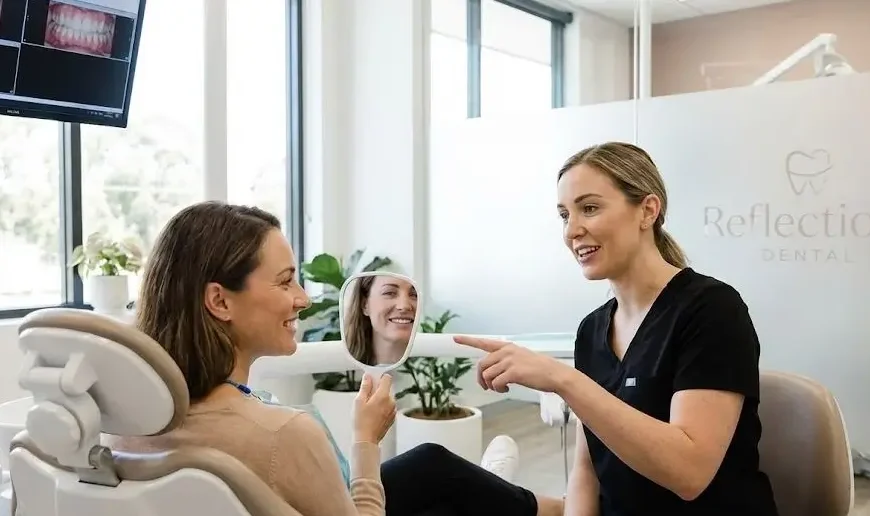
You book a cleaning with a Southeast Portland family dentist, mention one thing that has bothered you for years, and suddenly the conversation shifts from cavities and gum checks to whitening, bonding, or straightening. That catches some people off guard. You may have grown up thinking a family dentist handles the basics and a cosmetic office handles everything else. That line is getting thinner, and there is a reason for it.
More family practices now offer cosmetic services because patients do not separate oral health from appearance as neatly as the dental industry once did. If your front tooth chips, if old fillings darken, or if crowding makes brushing harder, the issue is not only cosmetic. It affects confidence, comfort, and daily care. That is why family and cosmetic dentist services are showing up under one roof more often.
Family dentistry is responding to how patients actually live
Most people want one trusted office that knows their history, sees their children, tracks their gum health, and can also improve the look of a worn or uneven smile. That is not vanity. It is convenience mixed with trust. When you already know the team, it feels easier to ask about stained teeth, small gaps, or a smile that no longer looks the way it used to.
Family dental offices also see the long arc of a patient’s oral health. They watch habits, bite changes, grinding, recession, and aging restorations over time. That gives them a better view of when a cosmetic concern is tied to function. A patient may come in asking for whitening and learn that enamel wear or leaking fillings are part of the picture. Another may ask about bonding for a chipped edge and find out that nighttime clenching keeps causing the damage.
Public health data keeps reinforcing how much oral health shapes everyday life. The CDC’s oral health overview links oral health with eating, speaking, learning, and overall well-being. The 2024 oral health surveillance report also shows that untreated dental issues remain common across age groups. When prevention and appearance are handled together, patients often get care earlier instead of waiting until a small issue turns expensive.
Cosmetic smile care often overlaps with prevention and repair
This shift is not only about patient demand. It is also about modern treatment planning. Cosmetic work today often sits close to restorative care. Tooth colored fillings, enamel shaping, veneers, clear aligners, and crowns can improve appearance while also protecting tooth structure or making hygiene easier.
You see this in everyday cases. A parent wants their teen’s crowded teeth straightened because photos matter, but straighter teeth can also reduce hard-to-clean overlap. An adult asks about replacing metal fillings because they look dark when they laugh, and the new restoration also seals weak areas better. Someone wants to close a gap, but the real win is that the bite becomes more stable and food stops trapping between teeth.
Research also supports the emotional side of this care. A study available through PubMed Central discusses how dental appearance can affect confidence, social comfort, and quality of life. That matters. If you hide your smile in work meetings or family photos, the problem is not superficial to you.
Why a cosmetic dental expansion makes sense inside a family practice
Family practices are built around continuity. They already handle exams, X-rays, periodontal checks, fillings, crowns, and long-term maintenance. Adding cosmetic smile care is often a natural extension, not a sharp change in identity. The office already has the records, the imaging, and the clinical context to recommend options that fit your health, budget, and timeline.
That also helps avoid a common frustration. Patients do not want to be passed from office to office for every stage of care. If whitening is safe after gum treatment, or if aligners make more sense before bonding, one practice can sequence the work properly. That saves time and reduces the risk of cosmetic choices that ignore the health side.
This is also why more people search for a smile-focused dentist without wanting to leave their regular provider behind. They want one relationship, not a patchwork of referrals.
Common differences between basic care and cosmetic treatment planning
| Concern | Basic Family Dental Focus | Cosmetic Smile Care Focus | Best Combined Approach |
|---|---|---|---|
| Stained teeth | Check for decay, enamel wear, old restorations | Whitening or replacing visible restorations | Treat disease first, then match color safely |
| Chipped front tooth | Rule out fracture depth and bite damage | Bonding or veneer for shape and symmetry | Repair chip and address grinding if present |
| Crooked or crowded teeth | Monitor cleaning access and gum health | Aligners or reshaping for appearance | Straighten with hygiene and bite stability in mind |
| Worn smile | Identify clenching, erosion, weak teeth | Rebuild length and improve smile line | Restore appearance while protecting teeth long term |
Smart next steps when you want both health and appearance addressed
Ask for a full smile and health review. Do not limit the conversation to the one tooth that bothers you. Ask how your gums, bite, enamel, and existing dental work affect your options. The best cosmetic plans start with a complete exam.
Set your real priorities before treatment starts. Some people want the fastest visible change. Others care more about longevity, cost, or keeping treatment conservative. Say that clearly. A good family practice can often offer more than one path.
Request a phased plan. If you need preventive or restorative work first, get the sequence in writing. You may start with cleaning, gum treatment, or a night guard before whitening or bonding. That order protects your result and your budget.
Family and cosmetic dentistry is becoming one conversation
The expansion into cosmetic care reflects what patients have been saying for years. You do not want a healthy mouth that still makes you self-conscious, and you do not want a pretty result built on untreated problems. You want both handled with care, honesty, and a plan that fits real life.
If you have been putting off questions about your smile because they felt too small or too personal, bring them up at your next visit. A modern family dentistry cosmetic services approach is designed for exactly that kind of conversation.


 By
By