You can spot a veneer that does not match from across the room, and that is usually the fear sitting underneath the excitement. You want a better smile, not a smile that looks separate from the rest of your face. If only one or a few teeth need treatment, the real challenge is not placing the veneer. It is making that veneer disappear into the teeth you are keeping, which is why choosing a skilled Toledo dentist matters.
That is where good cosmetic work shows. Shade, shape, surface texture, light reflection, and even the tiny uneven qualities that make natural teeth look real all have to line up. How dentists blend new veneers with untreated natural teeth comes down to planning, communication with the lab, and a careful match that respects the teeth you already have instead of trying to overpower them.
Blending veneers with natural teeth depends on more than color
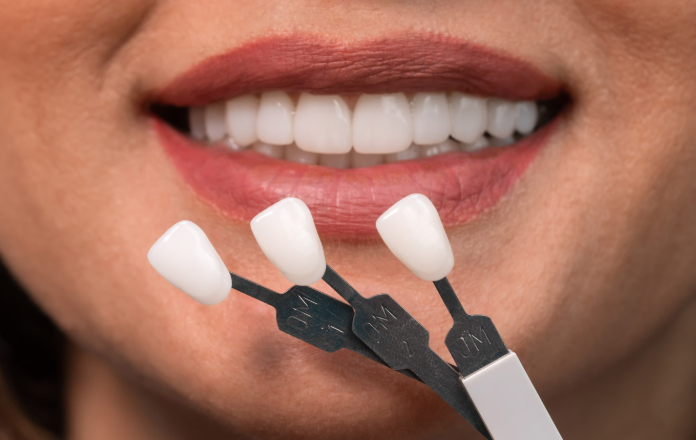
Most people think the match is only about picking the right white. It is not. Natural teeth are layered. They have a base shade, but they also have translucency near the edges, faint variations from one tooth to the next, and a surface texture that changes how light bounces off them. A veneer that is technically the right shade can still look wrong if it is too flat, too opaque, too smooth, or too bright.
This is why a dentist often studies your smile in different lighting, takes close photos, and may use shade guides at several points on the tooth instead of choosing one simple color. Dental ceramics are made to mimic enamel and dentin, and the way these materials handle light is a big part of the final result. Research on porcelain laminate veneers has long supported their ability to reproduce natural tooth appearance when case selection and material design are handled well, as described in this clinical review of porcelain laminate veneers.
If your untreated teeth have small stains, mild wear, or a slightly warmer tone, the veneer may need to echo that. That sounds backward when you have been picturing a brighter smile, but an exact match often looks better than a dramatic mismatch. In some cases, your dentist may suggest whitening first so the veneer can be made to a lighter baseline that still blends.
Cosmetic dentist planning shapes the final match
A skilled cosmetic dentist usually starts by deciding whether veneers alone will create balance or whether another step should happen first. Whitening is common because natural teeth can be lightened before the veneer shade is finalized. Orthodontic correction may matter if crowding or spacing would make a single veneer stand out. Bonding on nearby teeth may help if one tooth is being corrected and the adjacent teeth have chips or uneven edges.
You might be thinking about one front tooth that bothers you every time you see a photo. That single tooth is often the hardest case, not the easiest. Matching one veneer to the surrounding teeth leaves no room for error. When two central front teeth are treated together, symmetry is easier to control. When only one is treated, the dentist and lab have to copy nature with unusual precision.
That precision includes shape. Teeth are not identical blocks. They have line angles, edge contours, and tiny asymmetries that keep them from looking fake. A veneer that is too square, too long, or too polished can draw attention even if the shade is close. This is the same reason restorations such as crowns also require careful color and form selection to look natural, as patient guidance on crowns and bridges explains.
Natural looking dental veneers require material and lab skill
Natural looking dental veneers are built as much in the lab as in the dental chair. The ceramist has to understand the prescription, the photos, and the character of the neighboring teeth. Some veneers are layered by hand to create depth and translucency. Others are milled and then customized. Neither method is magic on its own. The result depends on how well the material is chosen for your case.
Thin veneers can preserve more enamel and can look very lifelike, but they also allow more of the underlying tooth color to influence the final shade. If the tooth underneath is dark, discolored, or previously restored, the veneer design has to account for that. More opaque porcelain can block discoloration, but too much opacity can make the tooth look chalky. This is the balancing act behind tooth veneer color matching.
See also: Secretarial Services: Streamline Your Business Operations
| Factor | Helps the Veneer Blend | Makes the Veneer Stand Out |
|---|---|---|
| Shade selection | Matching value, hue, and translucency in natural light | Choosing a shade based only on “whiteness” |
| Surface texture | Copying the tiny ridges and gloss level of nearby teeth | Making the veneer too smooth or too shiny |
| Tooth shape | Following your natural line angles and edge contours | Using a generic smile design that ignores adjacent teeth |
| Underlying tooth color | Adjusting ceramic opacity for the tooth underneath | Ignoring stains, old fillings, or dark tooth structure |
| Pre treatment whitening | Creating a stable color target for untreated teeth | Skipping whitening when surrounding teeth are darker than desired |
Veneer color matching works best when you prepare before treatment
Whiten first if your dentist recommends it. Veneers do not whiten the way natural teeth do. If you bleach after veneers are placed, the untreated teeth may change while the veneers stay the same. Doing whitening first gives the dentist a cleaner target and gives you more control over the final smile.
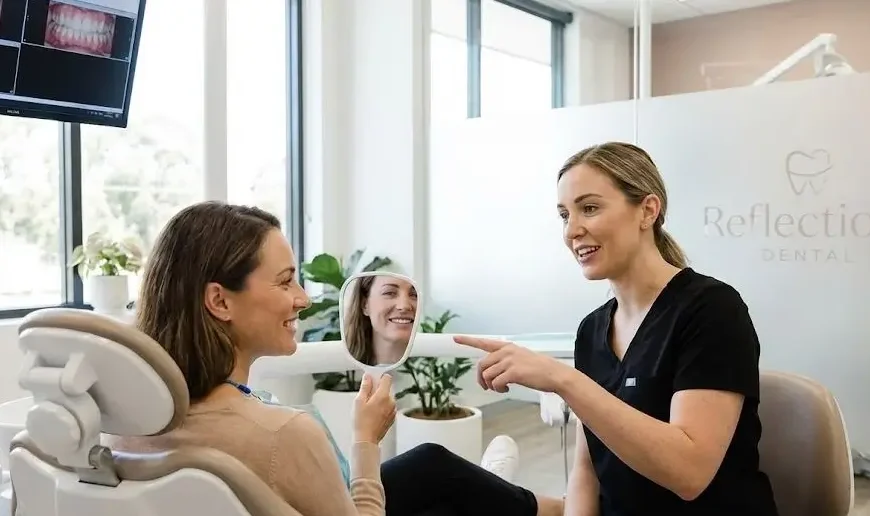
Bring real world references. A filtered selfie is not useful. Photos of your smile in daylight, old pictures before wear or staining, and examples of smiles you like can help your dentist understand whether you want a seamless match or a slightly brighter overall look. That conversation matters more than people expect.
Ask for a mock up or try in when possible. Many cases benefit from a provisional or a try in stage. This gives you and your dentist a chance to check shape, brightness, and how the veneer sits next to untouched teeth before the final bonding. Small changes at this stage can prevent years of noticing the same detail in every mirror.
A well blended veneer should look like your tooth, only better
The goal is not to make one tooth look perfect in isolation. The goal is to make your whole smile look believable and balanced. Veneers matched to natural teeth should not announce themselves. They should fit your face, your age, your coloring, and the teeth you still have.
If you are considering veneers, ask for a plan that covers shade, material, whitening, and whether one or more teeth should be treated for a better match. A careful cosmetic dentist can guide that process and protect you from the result you are trying to avoid, which is a smile that looks “done” instead of simply looking like you.


 By